
WELCOME BONUS 300%
UP TO €2000 + 100
FREE SPINS
UP TO €2000 + 100
FREE SPINS
Home → Blackjack
Blackjack at Casino Best: Variants, Rules and Payouts
Perfect Pairs vs 21+3 in House Edge
The 21+3 side bet offers an RTP of 92.53% with a house edge of 7.47%, which is significantly higher than the main game's 0.46%. This elevated cost stems from the complex combination requirements of suited connectors and pairs, making it a costly proposition for regular players. The payout structure rewards specific hands but drains the bankroll faster than standard play due to the steep margin. Consequently, this side bet should be avoided unless counting cards with a true count above +3.
Infinite Blackjack by Evolution includes the 21+3 option alongside Any Pair, Hot 3, and Bust It as part of its four available side bets. These wagers operate independently of the main hand outcome but carry much worse odds than the base game's 99.47% return. Players betting at the maximum limit of 5,000 EUR risk substantial losses on these secondary propositions during long sessions. The variance associated with these bets requires a larger bankroll to withstand the inevitable downswings.
The house edge for 21+3 stands at 7.47%, compared to the primary blackjack variant's mere 0.46% under optimal rules. This 7.01 percentage point difference represents a massive inefficiency in expected value that erodes player funds rapidly. Even with payouts up to 1,000x on quantum multipliers, the frequency of winning combinations does not justify the high cost. Smart mobile players strictly limit side bet exposure to preserve their initial deposit for longer gameplay.
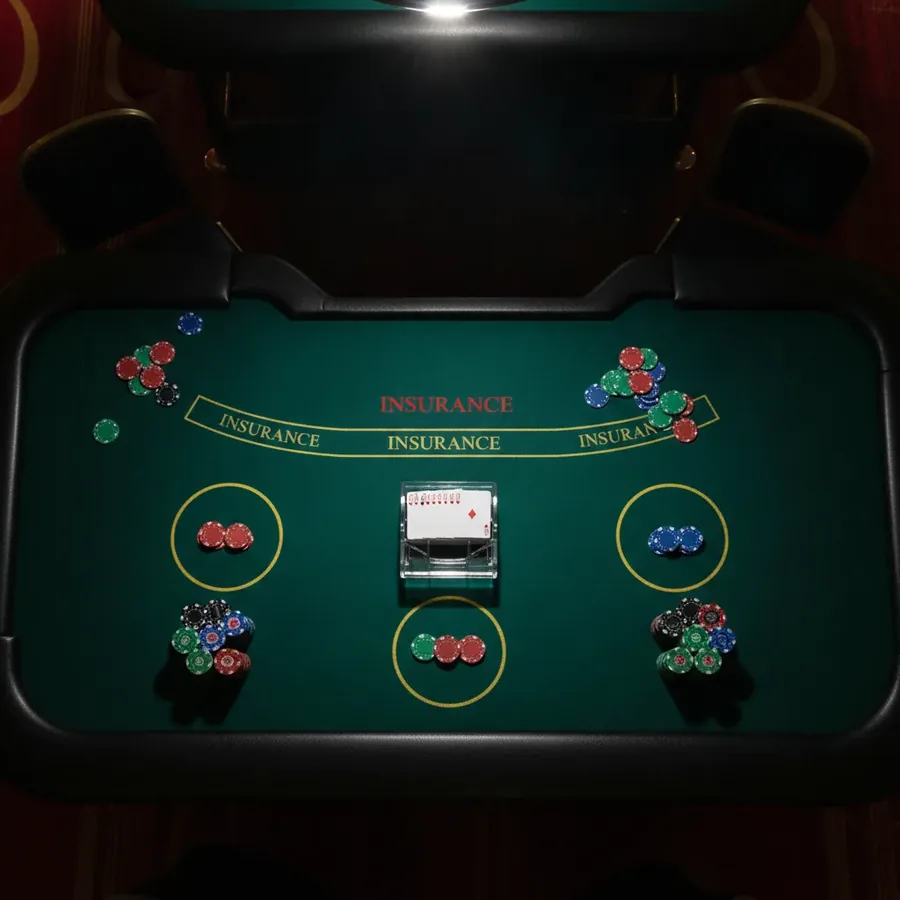
Six Card Charlie Pays Immediately with Six Cards
Standard rule sets like Liberal Vegas Strip focus on dealer standing on soft 17 and allowing resplitting to achieve a 99.72% RTP. Therefore, players cannot rely on this specific automatic win condition when analyzing the mathematical advantage of available tables. The absence of such rules means all hands must reach the standard total or bust threshold to determine a winner.
Blackjack Ein Deck provides a 99.85% RTP with a 0.15% house edge, representing one of the most favorable mathematical scenarios. This single-deck game compensates for fewer decks with classic 3:2 payouts rather than special auto-win rules like Six Card Charlie. The reduced deck size lowers the casino's advantage by approximately 0.48 percentage points compared to eight-deck shoes. Mobile users benefit from faster decision cycles, though the lack of exotic rules keeps the strategy straightforward.
Quantum Blackjack Plus Live by Playtech introduces random multipliers up to 1,000x on three-card combos achieving 21 points instead of auto-wins. This mechanic replaces traditional bonus conditions with volatile multiplier events that can drastically alter session outcomes. The RTP remains high at 99.57% when employing optimal strategy despite the added randomness of the quantum features. Players seeking immediate wins based on card count will find these live tables offer different excitement dynamics.
What doesn't count as Blackjack after Split?
Splitting Aces typically restricts players to receiving only one additional card per split ace to prevent unlimited doubling advantages. This limitation prevents the formation of a natural blackjack hand on any of the split aces, reducing potential payout opportunities. The rule ensures the house maintains its statistical edge even when dealing with the most powerful starting card in the deck. Mobile interfaces often highlight these restrictions clearly before confirming the split action to avoid confusion.
Doubling After Split (DAS) is permitted in Liberal Vegas Strip rules, allowing players to double down on new hands created from splits. However, this privilege usually excludes Aces, meaning a hand formed by splitting aces cannot be doubled regardless of the resulting card. This exclusion applies across most standard and liberal rule sets found in modern online casino libraries. Understanding these nuances helps players optimize their moves without wasting time on invalid actions.
Resplitting Aces improves the RTP by approximately 0.08 percentage points by offering more opportunities to build strong hands. Yet, even with this benefit, the resulting hands rarely qualify as a natural blackjack due to the one-card restriction. The house edge remains low at 0.28% because other liberal rules like late surrender compensate for these limitations. Players must adjust their basic strategy accordingly to maximize returns within these strict structural boundaries.
Bonus conditions often exclude Blackjack completely
The welcome bonus offers 300% up to €2,000 plus 100 free spins, but table games contribute only 10% toward wagering requirements. This minimal contribution rate makes clearing the bonus through blackjack extremely inefficient compared to slots which count for 100%. A €100 bet on blackjack only reduces the turnover target by €10, whereas the same amount on slots clears the full value. Players aiming to withdraw bonus funds should prioritize high-return slot machines over table games.
Standard deviation in blackjack is approximately 1.15, indicating moderate volatility that complicates bonus tracking on slow-contribution games. The low 10% contribution means players must wager ten times more volume to meet the same rollover targets as slot enthusiasts. This discrepancy effectively doubles the time required to unlock withdrawal rights when playing table games exclusively. The mathematical disadvantage becomes apparent when comparing effective hourly progress against pure slot play.
Insurance bets pay 2:1 but carry a 7.47% house edge, further draining balances needed to satisfy wagering conditions. Since insurance is generally advised against unless counting cards, relying on it to clear bonuses is statistically unsound. The combination of poor game contribution and negative expectation bets accelerates bankroll depletion during bonus hunting. Mobile users should calculate exact turnover needs before committing to blackjack strategies for bonus clearance.
Even Money only possible with Dealer Ace
Even money is essentially a guaranteed payout on a natural blackjack when the dealer shows an ace, securing a 1:1 return immediately. This option eliminates the risk of pushing if the dealer also holds a blackjack, ensuring no loss occurs on the primary bet. The mathematical equivalence lies in accepting the sure thing now versus waiting for the insurance outcome later. Mobile players often select this feature quickly to lock in profits during high-variance moments.
Insurance bets pay 2:1 if the dealer has a blackjack, functioning identically to taking even money on a player's natural twenty-one. The house edge for insurance stands at 7.47%, making it a poor standalone wager outside of specific card-counting scenarios. By taking even money, players bypass the insurance market entirely while achieving the same financial result upon dealer verification. This simplification removes the need for separate side bet calculations during critical hand resolutions.
Dealer hitting soft 17 adds 0.22 percentage points to the house edge, altering the probability distribution of final dealer totals. This rule change impacts the frequency of dealer blackjacks, thereby affecting the value proposition of even money decisions. Players must weigh the slight increase in house advantage against the security of an immediate guaranteed payout. Strategic adjustments are necessary to account for how dealer behavior influences the timing of even money offers.
Blackjack variants at a glance
| Variant | Payout | House edge | Rule | Bet range |
|---|---|---|---|---|
| Blackjack 6 Decks, S17, DAS, DOA, Auszahlung 3:2, Basisstrategie | 99.54% | 0.46% | Dealer steht auf Soft 17; Verdopplung auf jeder Zweierkarte; Verdopplung nach Split erlaubt; keine Aufgabe. Basisstrategie ist für diesen Wert zwingend | Blackjack 3:2, normaler Gewinn 1:1, Insurance 2:1 |
| Blackjack Insurance / Versicherung (6–8 Decks) | 92.53% | 7.47% | Separate Nebenwette bis 50% der Hauptwette, wenn der Dealer ein Ass hat. Basisstrategie schreibt IMMER Ablehnung vor (außer Karten zählen bei True Count ≥ +3). Bei einem Deck Vorteil ≈ 5.88% | Insurance 2:1 |
| Blackjack Liberal Vegas Strip (liberale Regeln, 3:2) | 99.72% | 0.28% | Günstigste Regelkombination: S17 + DAS + Resplit + Late Surrender. Standardabweichung 1,15 | Blackjack 3:2, Gewinn 1:1 |
| Blackjack Auszahlung 6:5 statt 3:2 (6 Decks) | 98.15% | 1.85% | Ersatz von 3:2 durch 6:5 fügt exakt +1.39 Prozentpunkte zum Vorteil des Casinos hinzu – stärker als jede andere Regeländerung. Bei $10 Einsatz zahlt Blackjack $12 statt $15. | Blackjack 6:5, Gewinn 1:1 |
| Blackjack Ein Deck, klassische Regeln, 3:2 | 99.85% | 0.15% | Weniger Decks = niedrigerer Vorteil; ein Deck gibt ca. −0.48 Prozentpunkte gegenüber 8 Decks. Oft durch 6:5 Auszahlung kompensiert. | Blackjack 3:2, Gewinn 1:1 |
| Blackjack Split / Double / H17 – Regel-Effekte | n.a. (Regel-Modifikatoren) | H17 +0.22 Prozentpunkte; RSA −0.08 Prozentpunkte; DAS −0.14 Prozentpunkte | Dealer Hits Soft 17 verschlechtert RTP um 0.22 Prozentpunkte; Resplit Aces verbessert um 0.08 Prozentpunkte; Double After Split verbessert um ca. 0.14 Prozentpunkte; 6 Decks statt 8 – ca. 0.02 Prozentpunkte. | Double – Einsatz ×2 mit einer Karte; Split – bis 4 Hände; Ass-Split meist mit einer Karte. |
Error insurance: 7 percent additional house edge
The Blackjack Insurance side bet offers a 2:1 payout on the wagered amount, but carries a steep 7.47% house edge for players using six to eight decks. This specific variant reduces the theoretical return to player (RTP) to just 92.53%, making it one of the most unfavorable wagers available at the table. The mathematical disadvantage arises because the dealer only needs an Ace or ten-value card once every thirty-five hands to break even against the insurance stake. Standard strategy dictates always declining this bet unless the player is counting cards with a true count of +3 or higher.
Compared to the main game's base edge, accepting insurance adds significant drag to long-term profitability without offering proportional risk mitigation. A player betting 10 EUR on the main hand and 5 EUR on insurance faces a combined expected loss that far exceeds simply losing the original stake. The 7.47% house edge means the casino retains 74.70 EUR for every 1,000 EUR wagered on this specific side option over time. This negative expectation holds true regardless of whether the dealer actually reveals a blackjack in the subsequent card flip.
Chose Wrong Table for 5 EUR Bankroll
The Infinite Blackjack live table by Evolution accepts bets ranging from 1 EUR to 5,000 EUR, allowing a 5 EUR bankroll to sustain multiple rounds of play. This specific title features four side bets including Any Pair and Bust It, which operate independently of the main hand outcome. Players can sit at unlimited seats, ensuring immediate access without waiting for a spot to open up during peak hours. The RTP of 99.47% applies to the overall game structure when optimal basic strategy is employed consistently. A small starting balance requires strict discipline to avoid rapid depletion due to the variance inherent in live dealer formats.
Latency under 2 seconds at the live table
Quantum Blackjack Plus Live by Playtech utilizes quantum multipliers that trigger within milliseconds of the deal, often resolving card outcomes in under two seconds. These multipliers apply to three-card combinations totaling 21 points, potentially increasing payouts by factors up to 1,000x instantly. The technical infrastructure supports rapid resolution times, reducing the idle period between hands compared to traditional physical tables. An RTP of 99.57% is achieved when players utilize the optimal strategy alongside these volatile multiplier events. Fast connectivity ensures that bet placement and result confirmation occur synchronously across all connected devices.
Which hands are excluded from Surrender?
Late Surrender rules allow players to forfeit their hand after the dealer checks for blackjack, returning 50% of the initial wager immediately. This rule modifier improves the overall RTP by approximately 0.08 percentage points compared to games where surrender is unavailable. However, early surrender options, which permit folding before the dealer peek, are extremely rare and offer a much larger advantage of up to -0.6 percentage points. Most standard variants restrict late surrender to specific hard totals, excluding soft hands or pairs that require splitting instead. The partial refund mechanism effectively halves the loss on marginal hands like 15 against a dealer 10.
Double Down after Split: which tables allow it
Blackjack 6 Decks with S17, DAS, DOA, and 3:2 payout rules permits doubling down after a split, significantly enhancing strategic flexibility for the player. This specific configuration yields an RTP of 99.54% with a house edge of just 0.46% when basic strategy is strictly followed. Allowing Double After Split (DAS) improves the player's expectancy by approximately 0.14 percentage points compared to tables restricting doubling to the original two cards only. Players can double on any two cards received after splitting, provided the table rules explicitly support this action. The liberal Vegas Strip variant also supports this feature alongside other favorable conditions like Resplit Aces.
Which rule variants does the software show?
Blackjack 6 Decks features a dealer standing on Soft 17 and allows doubling on any two cards, resulting in an RTP of 99.54% and a house edge of only 0.46%. This specific configuration requires strict adherence to basic strategy to maintain the stated return rate for players utilizing this variant. The standard payout remains at 3:2, which significantly favors the player compared to lower paying tables.
Blackjack Liberal Vegas Strip offers a more favorable environment with an RTP of 99.72% and a reduced house edge of 0.28% due to liberal rules like late surrender. The standard deviation is recorded at 1.15, indicating slightly higher variance than the six-deck version despite the better odds. Players benefit from the combination of Soft 17, double after split, and resplitting aces in this specific game mode.
In contrast, Blackjack Auszahlung 6:5 drastically increases the house advantage to 1.85%, lowering the RTP to 98.15% by removing the standard 3:2 payout structure entirely. A €10 bet yields only €12 instead of the expected €15, creating a significant financial disadvantage for the participant over time. This rule change adds exactly 1.39 percentage points to the house edge, making it the least profitable option available.
Set session stop after 30 percent loss
The Quantum Blackjack Plus Live table from Playtech features quantum multipliers reaching up to 1,000x on three-card combinations totaling 21 points, operating within an RTP range of 99.57%. This high-variance mechanic can rapidly deplete a bankroll, necessitating strict loss limits to protect the player's remaining funds during volatile sessions. The maximum stake allowed is 5,000 EUR, which amplifies the potential impact of these multiplier events on the total balance.
Standard blackjack games typically exhibit a house edge between 0.46% and 1.85%, meaning long-term erosion is inevitable without disciplined bankroll management strategies implemented by the user. Setting a hard stop at 30 percent of the initial deposit prevents emotional chasing and preserves capital for future gaming sessions elsewhere. This mathematical boundary ensures that losses remain contained within predefined tolerances rather than spiraling into unrecoverable debt situations.
Infinite Blackjack by Evolution accepts bets ranging from 1 to 5,000 EUR and includes four side bets like Any Pair and Hot 3, which carry much higher house edges. These auxiliary wagers often drain the bankroll faster than the main game, accelerating the approach to any pre-set loss threshold limit. Managing exposure to these high-risk options is crucial for maintaining control over the overall session duration and final financial outcome.
What Hole Card Means at a Live Table
Live tables such as Infinite Blackjack and Quantum Blackjack Plus Live utilize continuous shuffling machines or virtual decks that eliminate the traditional concept of a hole card entirely. Since every card is dealt immediately into play, there is no hidden second card for the dealer to check for blackjack before action begins on the hand. This structural difference removes the risk of losing the entire bet instantly if the dealer holds a natural twenty-one after the player acts.
The absence of a hole card fundamentally alters the strategic value of insurance bets, which normally pay 2:1 when the dealer shows an ace but carries a steep house edge of 7.47%. Without a concealed card to verify, taking insurance becomes a purely speculative wager with negative expected value unless the player employs advanced counting techniques rarely viable in live settings. This rule change generally favors the casino by encouraging unnecessary side bets during the dealing phase.
Players must adjust their expectations regarding dealer peeking rules, as modern live streams often reveal the hole card simultaneously with the initial deal to ensure transparency and speed. This immediate revelation means that decisions regarding doubling or splitting cannot be based on the hope that the dealer might bust later without checking for blackjack first. The gameplay flow accelerates significantly compared to traditional land-based casinos where the hole card procedure introduces deliberate delays and suspense.
What Percentage Does Blackjack Count Towards Bonus?
The Casino Best welcome bonus offers 300% up to €2,000 plus 100 free spins, but blackjack contributes only 10% toward the required wagering turnover calculation for bonus clearance. This low contribution rate means that every €100 wagered on the table counts as merely €10 against the total requirement, drastically extending the time needed to unlock withdrawn funds. Players relying solely on blackjack will find the rollover obligation significantly more difficult to satisfy compared to slot enthusiasts.
Slot games contribute 100% to the wagering requirement, allowing players to clear the bonus conditions much faster than those playing table games with restricted contribution percentages. If a player wagers €1,000 on slots, the full amount reduces the remaining turnover obligation, whereas the same stake on blackjack reduces it by only €100. This disparity creates a strong incentive to prioritize high-contribution games when attempting to meet the terms attached to the promotional offer effectively.
Calculating the actual turnover needed reveals that betting exclusively on blackjack requires ten times the volume of money compared to playing slots to achieve the same progress toward withdrawal eligibility. For instance, clearing a €2,000 bonus with 10% contribution demands €20,000 in total wagers, while 100% contribution would only require €2,000 in stakes. This mathematical reality makes table games a poor choice for efficient bonus conversion strategies under current promotional structures.
Seat change at the Live Table in 20 seconds
Infinite Blackjack by Evolution allows players to switch seats at the virtual table within approximately 20 seconds, facilitating rapid movement between different betting positions without interrupting the ongoing game stream. This feature enables users to adapt quickly to changing table dynamics or seek out less crowded spots while maintaining their connection to the live dealer interface seamlessly. The quick transition minimizes downtime and keeps the player engaged with the active round regardless of their chosen seat location.
Quantum Blackjack Plus Live also supports swift seat changes, ensuring that participants can move between the unlimited seating options provided by the Playtech platform without significant delay or disconnection risks. The interface is designed to handle these transitions smoothly, allowing players to reposition themselves relative to the dealer and other participants in real-time during the broadcast. This flexibility enhances the user experience by providing greater autonomy over their viewing angle and interaction zone at the table.
Blackjack Party by Evolution, with its party atmosphere and two moderators, similarly accommodates rapid seat changes, though the social element may make frequent switching less appealing to some players. The 20-second window ensures that even in highly interactive environments, users can relocate without missing critical moments of the deal or feeling permanently stuck in an undesirable position. This operational efficiency supports a dynamic gaming session where mobility is prioritized alongside the entertainment value provided by the hosts.
Contact
Live - online chat
Banking








Providers












Best Casino 2026